

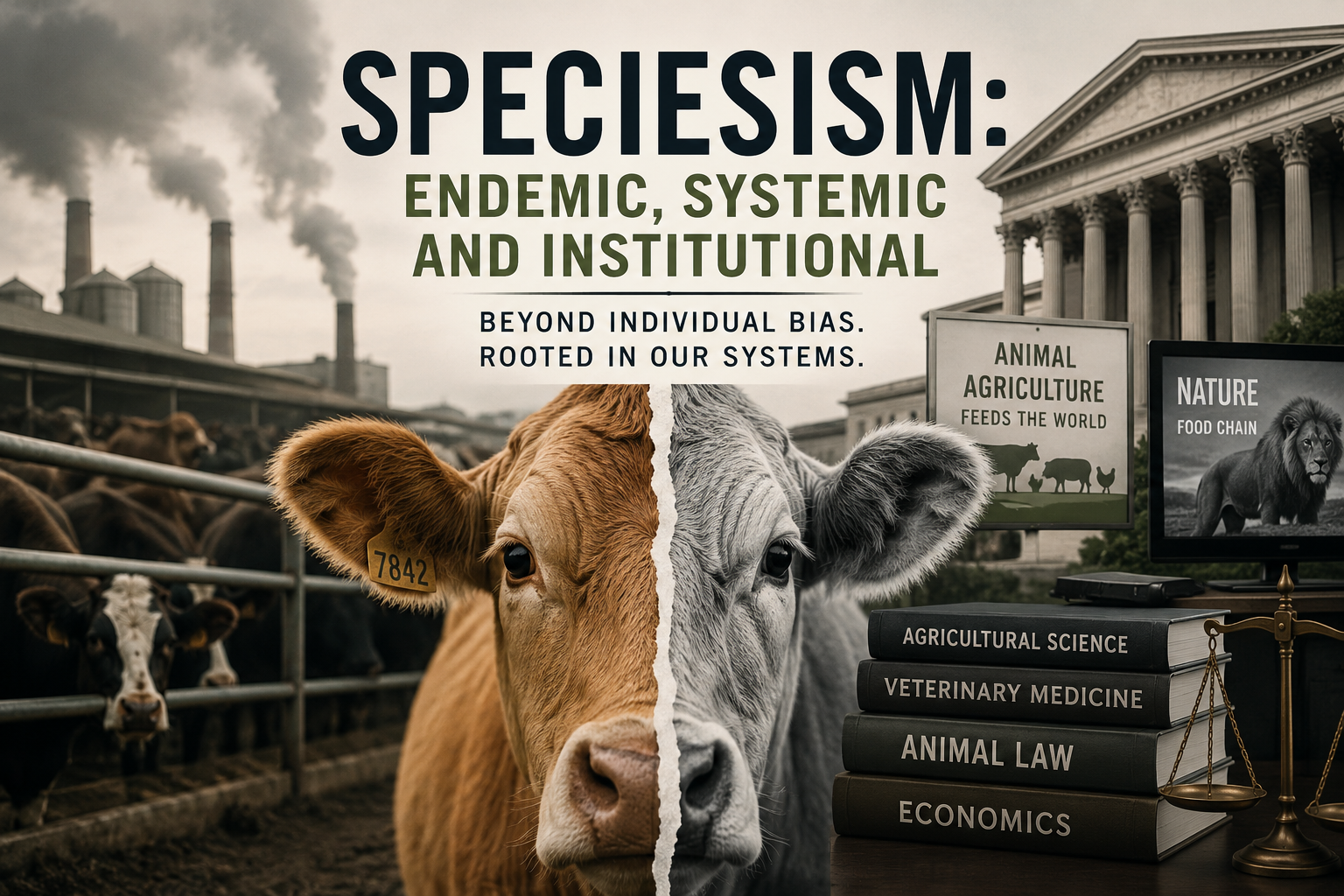
Speciesism is often understood as discrimination against individuals based solely on their species membership. However, like racism, sexism, and other forms of oppression, speciesism operates far beyond individual attitudes. It is embedded within our institutions, social systems, cultural norms, and everyday language.
This article explores how speciesism has become endemic, systemic, and institutionalised within society. From education and law to media, agriculture, and economics, the exploitation of non-human animals is often normalised, rendered invisible, and treated as morally unremarkable. Many people who would reject prejudice against humans may unknowingly participate in speciesist systems because these practices are woven into the fabric of everyday life.
Drawing parallels with other forms of discrimination, the article argues that understanding speciesism requires looking beyond individual choices and examining the wider structures that shape beliefs, behaviours, and social norms. Challenging speciesism therefore involves not only personal reflection but also questioning the institutions and cultural narratives that sustain unequal treatment of non-human animals.





Leave a Reply