

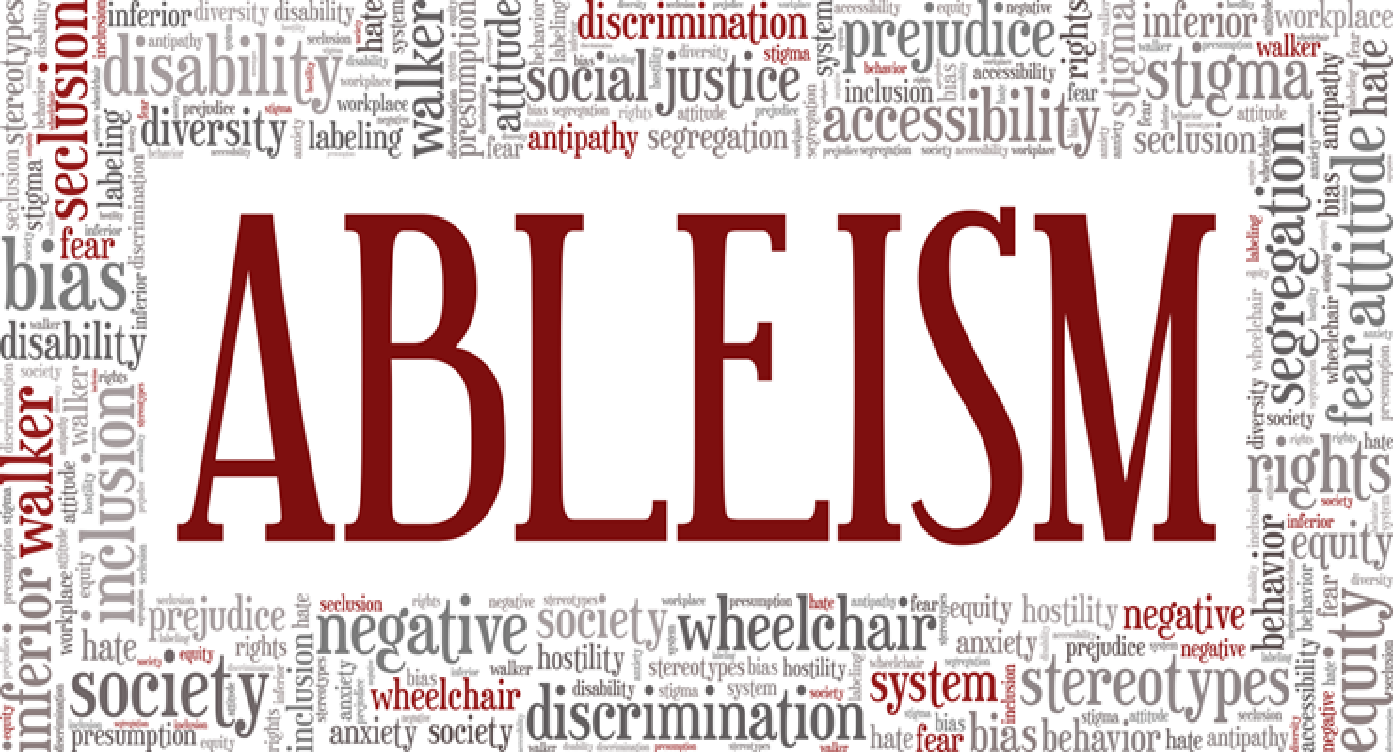
In March 2025, I had the privilege of delivering a webinar for the European Mentoring and Coaching Council (EMCC) Neurodiversity Special Interest Group, exploring a topic that I believe sits at the heart of inclusive coaching practice: how ableism quietly shapes coaching, and what we can do about it.
Coaching is often described as a profession that empowers people to reach their potential. Yet coaching does not exist in isolation from society. Like every helping profession, it is influenced by the cultural values, assumptions, and biases that surround it.
One of those influences is ableism.
Ableism is more than overt discrimination. It is a system of beliefs, practices, and structures that privilege certain ways of thinking, communicating, behaving, and working while marginalising others. It shapes workplaces, education, healthcare, leadership, and our understanding of what success looks like. It also influences coaching, often in subtle ways that even experienced practitioners may not recognise.
During the webinar, we explored three interconnected forms of ableism.
Structural ableism is embedded within organisational systems, policies, and environments.
Interpersonal ableism appears through everyday assumptions, language, and interactions.
Internalised ableism develops when individuals absorb societal messages that tell them they are somehow deficient, leading to shame, self-doubt, and reluctance to ask for support.
For coaches, recognising these dynamics is essential because our practice can unintentionally reinforce them.
Many traditional coaching models are built upon assumptions of consistent productivity, linear progress, individual responsibility, and the belief that success comes primarily through changing the individual. While these approaches can be valuable, they may also overlook the realities of fluctuating energy, executive functioning differences, sensory needs, chronic health conditions, and inaccessible environments.
When this happens, coaching can inadvertently communicate that the client is the problem rather than questioning whether the system itself requires adaptation.
Throughout the session, we examined practical examples of how ableism can appear within coaching conversations.
For example, encouraging an autistic client to communicate in a more “professional” or “warmer” way may seem helpful on the surface. Yet if this advice reinforces masking over authenticity, coaching risks validating neurotypical communication styles as the standard by which all others are judged.
Similarly, traditional goal-setting approaches often assume predictable progress and consistent executive functioning. For many neurodifferent clients, progress is rarely linear. Flexible, process-focused approaches can be far more effective than rigid outcome-driven frameworks.
These examples prompted rich discussion about the assumptions many of us have inherited as coaches—not because we intended harm, but because these assumptions are deeply embedded within society itself.
Rather than leaving participants with theory alone, the webinar focused on practical changes coaches can begin making immediately.
We explored how to create anti-ableist coaching spaces through accessible communication, flexibility around energy and executive functioning, recognising the impact of masking, considering intersectionality, and balancing challenge with appropriate accommodation. We also discussed the importance of reflective supervision, reflexive journalling, and continuing professional development as ways of recognising our own unconscious assumptions and continually developing our practice.
Perhaps the most important message from the session was that anti-ableist coaching is not about lowering expectations or avoiding challenge. It is about ensuring that challenge is meaningful, equitable, and grounded in each client’s reality rather than society’s assumptions.
Ultimately, coaching has the potential to become much more than a process of helping people adapt to environments that exclude them. It can become a practice that empowers individuals while also encouraging organisations, leaders, and society to rethink the norms that create exclusion in the first place.
Breaking barriers begins with recognising them.
I am incredibly grateful to the EMCC Neurodiversity Special Interest Group for the opportunity to facilitate this discussion and to everyone who attended and contributed such thoughtful reflections. The willingness of coaches to critically examine their own practice gives me great hope for the future of coaching psychology and the coaching profession more broadly.
Real inclusion is not achieved by helping people become more like everyone else. It begins when we create coaching spaces where diverse ways of thinking, feeling, communicating, and being are recognised as valuable expressions of our shared humanity.



Leave a Reply