

What if coaching psychology became more than a profession focused on helping individuals achieve personal goals? What if it also became a catalyst for challenging the systems that shape those goals in the first place?
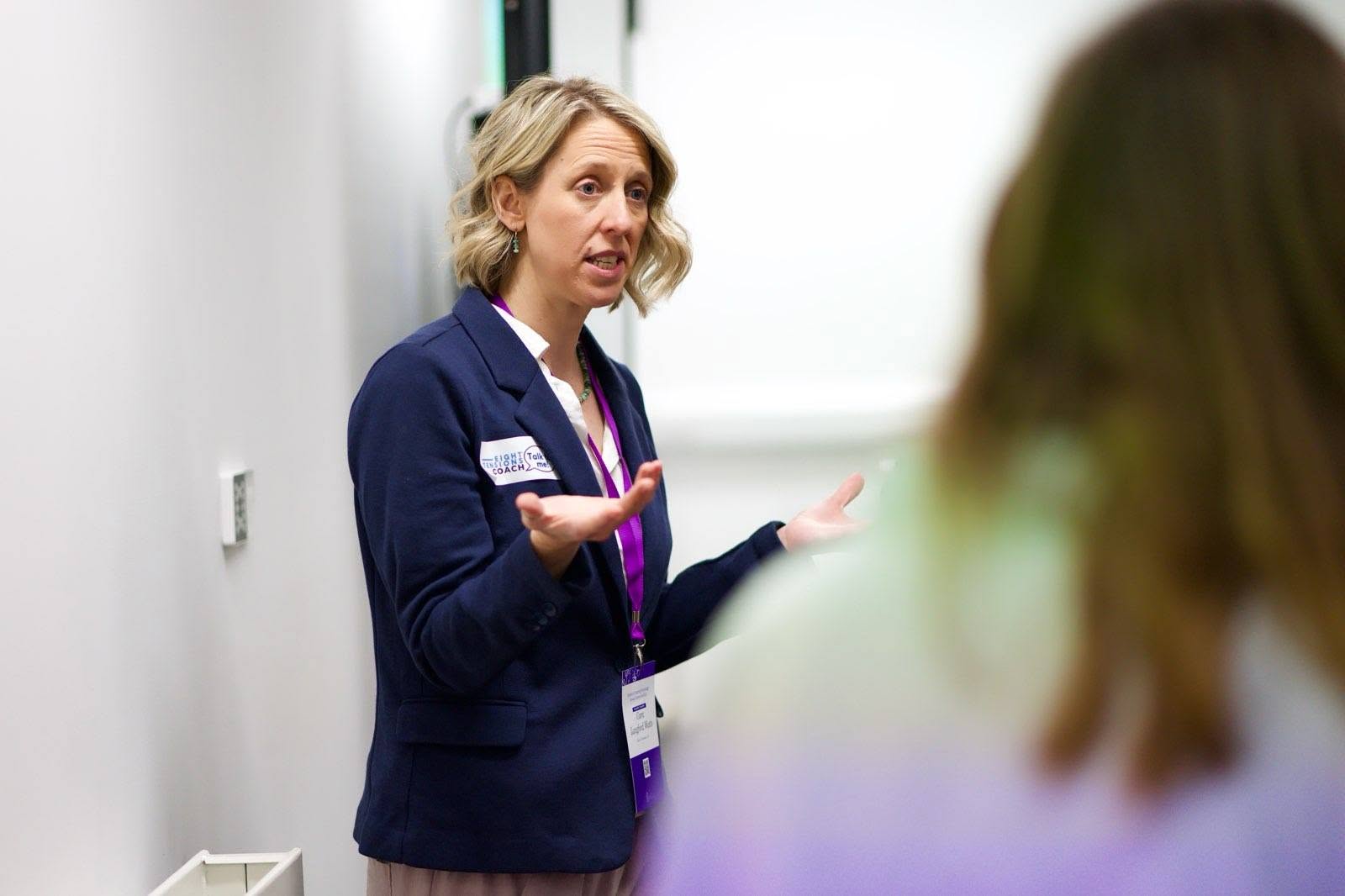
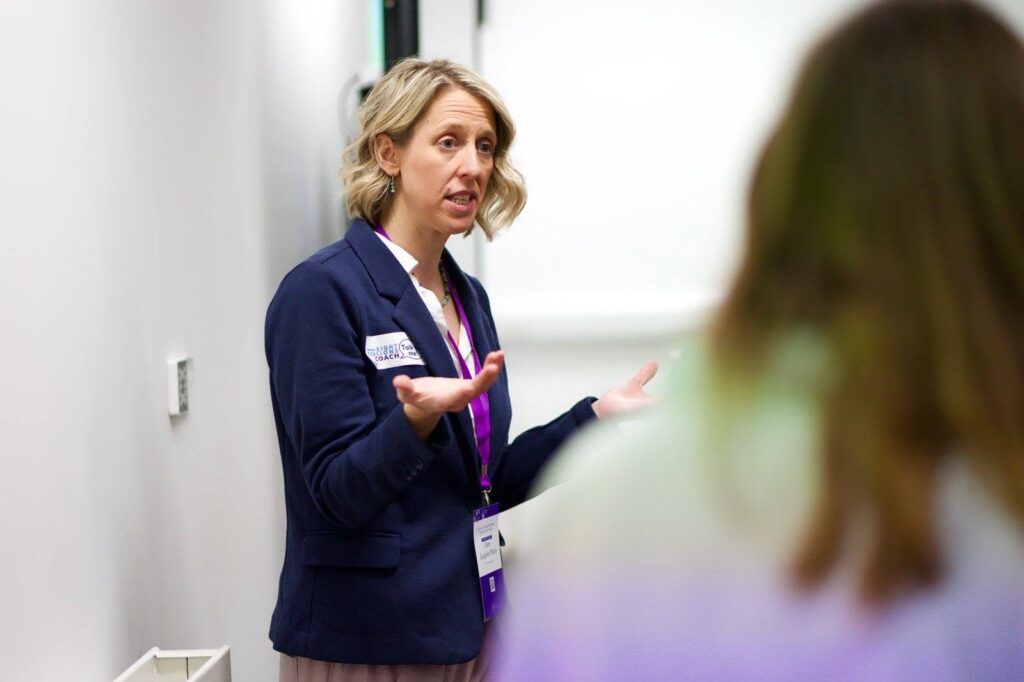
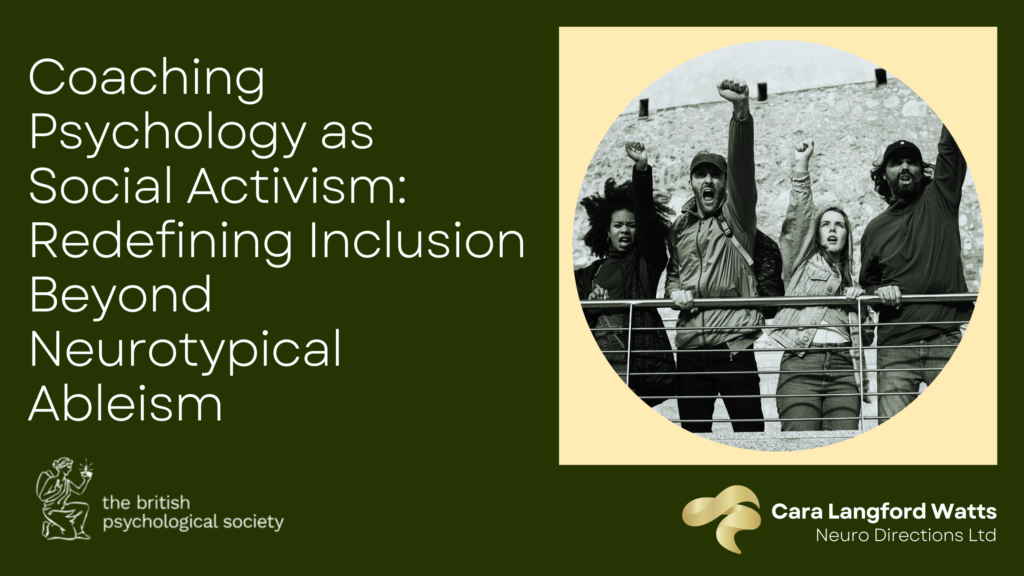
These were the questions at the heart of my presentation, “Coaching Psychology as Social Activism: Redefining Inclusion Beyond Neurotypical Ableism,” delivered at the 2025 British Psychological Society Division of Coaching Psychology Conference.
Coaching psychology has traditionally focused on supporting individual growth, performance, wellbeing, and achievement. While these aims remain important, they often sit within broader societal narratives that privilege independence, productivity, resilience, and continual self-improvement. These values, heavily influenced by neoliberal thinking, can unintentionally reinforce the idea that success depends solely upon an individual’s ability to adapt, regardless of the barriers created by the environments in which they live and work.
For many people with neuro differences, these barriers are not incidental—they are systemic.
Ableism continues to shape our workplaces, education systems, healthcare services, and wider society. It influences how intelligence, competence, professionalism, communication, and success are defined. It also affects how individuals come to understand themselves, often leading to internalised ableism, where societal messages of deficit become woven into identity and self-worth.
If coaching psychology seeks to empower individuals, then it must also be willing to examine the assumptions upon which its own practices are built.
Drawing upon my Master’s research exploring autistic women’s experiences of workplace coaching, I argued that coaching psychology has the opportunity to move beyond helping people adapt to existing systems. Instead, it can become a discipline that actively questions those systems, challenges deficit-based narratives, and contributes to creating environments where diverse ways of thinking, communicating, and existing are genuinely recognised as valuable.
This requires a shift in perspective.
Rather than asking, “How can we help this individual succeed within the current system?”, we might also ask:
- What assumptions are shaping our understanding of success?
- Whose needs were these systems designed to serve?
- What strengths remain invisible because they fall outside neurotypical expectations?
- How can coaching contribute to changing organisations and institutions, rather than simply changing the individual?
The presentation explored how coaching psychology can draw upon ideas from disability justice, social psychology, critical psychology, and systems thinking to broaden its understanding of inclusion. Inclusion should not mean helping people become more acceptable to existing structures. It should mean creating structures that value human diversity from the outset.
I also discussed practical ways coaches can begin embedding this perspective within their own practice. Reflexive supervision, critical reflection, adapted coaching models, and systemic case formulation all offer opportunities to recognise how power, identity, culture, and organisational contexts shape the coaching relationship. These approaches move coaching away from reactive accommodation towards proactive inclusion.
Ultimately, I believe coaching psychology has the potential to become a powerful form of social activism. Not activism through protest alone, but through the everyday conversations that shape how people understand themselves, how organisations define success, and how society responds to difference.
If coaching continues to focus solely on helping individuals fit into environments that exclude them, we risk reinforcing the very inequalities we seek to reduce. But if we embrace coaching as a vehicle for social justice, we can begin dismantling internalised ableism, influencing organisational culture, informing policy, and advocating for more equitable systems.
The future of coaching psychology lies not simply in developing individuals, but in transforming the contexts in which they live, learn, and work.
Because inclusion is not about accommodating people as exceptions. It is about recognising neuro differences as an ordinary, valuable, and essential part of human diversity.
I am incredibly grateful to everyone who attended the session and contributed to such thoughtful discussion. The enthusiasm and critical reflection shared during the presentation reinforced my belief that our profession is ready to have these conversations. I hope this marks the beginning of many more discussions about how coaching psychology can contribute not only to personal development, but to creating a more equitable and inclusive society for everyone.





Leave a Reply