

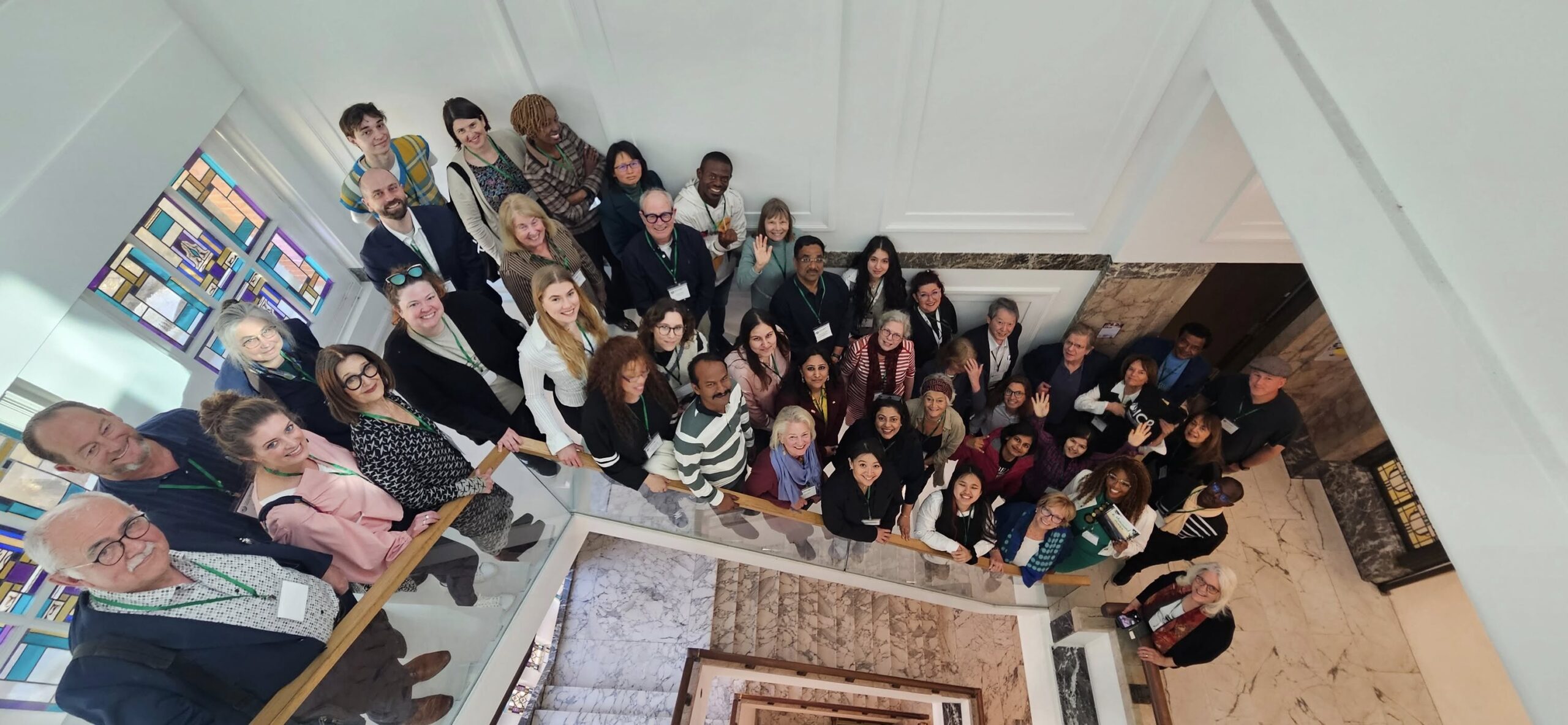
In April 2025, I had the privilege of presenting my research at the 83rd International Council of Psychologists Conference at Erasmus University College in Rotterdam. The conference theme centred on human rights, dignity, social inclusion, and justice, providing a powerful context in which to discuss the role coaching psychology can play in challenging institutional ableism.
My poster presentation, “Breaking Barriers: Addressing Institutional Ableism Through Coaching Psychology for Autistic Women,” drew upon my Master’s research exploring autistic women’s experiences of workplace coaching. While workplace coaching is increasingly recognised as an important intervention for supporting autistic employees, very little research has explored how autistic women themselves experience this process.
My research sought to address that gap.
Through a phenomenological approach, participants shared rich accounts of navigating workplaces that were often shaped by neurotypical assumptions about communication, professionalism, productivity, and success. Their experiences highlighted not only the personal challenges they faced but also the structural barriers embedded within organisational cultures.
Three overarching themes emerged from the research:
- The lived experience of autism in the workplace.
- The need for genuinely autism-inclusive organisational cultures.
- The importance of recognising intersectionality when understanding people’s experiences.
Collectively, these findings pointed towards a broader conclusion: many of the challenges experienced by autistic women do not arise from autism itself, but from institutional ableism embedded within systems, policies, and cultural expectations.
This has important implications for coaching psychology.
Rather than viewing coaching solely as a means of helping individuals adapt to their environment, coaching can also provide a space to question the assumptions that shape those environments. It can help individuals develop self-understanding and confidence while simultaneously encouraging organisations to reflect on their own practices, cultures, and definitions of success.
Coaching psychology therefore has the potential to become more than an individual intervention. It can become a catalyst for organisational learning, cultural change, and social justice.
Presenting this work within an international conference dedicated to human rights brought a new perspective to my own thinking. Across three days, psychologists from around the world shared research and lived experiences addressing climate change, war, genocide, migration, gender-based violence, forced marriage, systemic oppression, and social exclusion.
Although these topics differed significantly from my own research, a common thread connected them all: the recognition that psychology cannot remain isolated from the social and political contexts in which people live. Whether addressing discrimination, conflict, exclusion, or inequality, psychology has a responsibility not only to understand suffering but also to contribute to reducing it.
Several keynote speakers left a lasting impression. Professor Saths Cooper’s reminder that how we treat the most marginalised members of society says more about us than it does about them resonated deeply with the themes emerging from my own research. Equally powerful were Professor Halleh Ghorashi’s reflections on epistemic justice, identity, and the importance of ensuring that those whose voices have historically been overlooked are recognised as legitimate producers of knowledge.
Those conversations reinforced my growing belief that coaching psychology has an important role to play within wider movements for equity and inclusion. Coaching is not simply about helping people perform better within existing systems. It can also help expose the assumptions those systems are built upon and support the creation of environments in which diverse ways of thinking, communicating, and existing are genuinely valued.
Presenting this research internationally was a privilege, but it also strengthened my conviction that coaching psychology has the potential to become a discipline that actively contributes to social change. By listening carefully to lived experience, questioning deficit-based narratives, and challenging institutional ableism, coaching psychology can help create workplaces and communities where neuro differences are recognised not as exceptions to accommodate, but as valuable expressions of human diversity.
I remain incredibly grateful to everyone who contributed to the research, attended the poster discussion, and engaged in thoughtful conversations throughout the conference. The experience reinforced my commitment to developing coaching psychology as a discipline that places dignity, justice, and inclusion at the centre of practice.





Leave a Reply